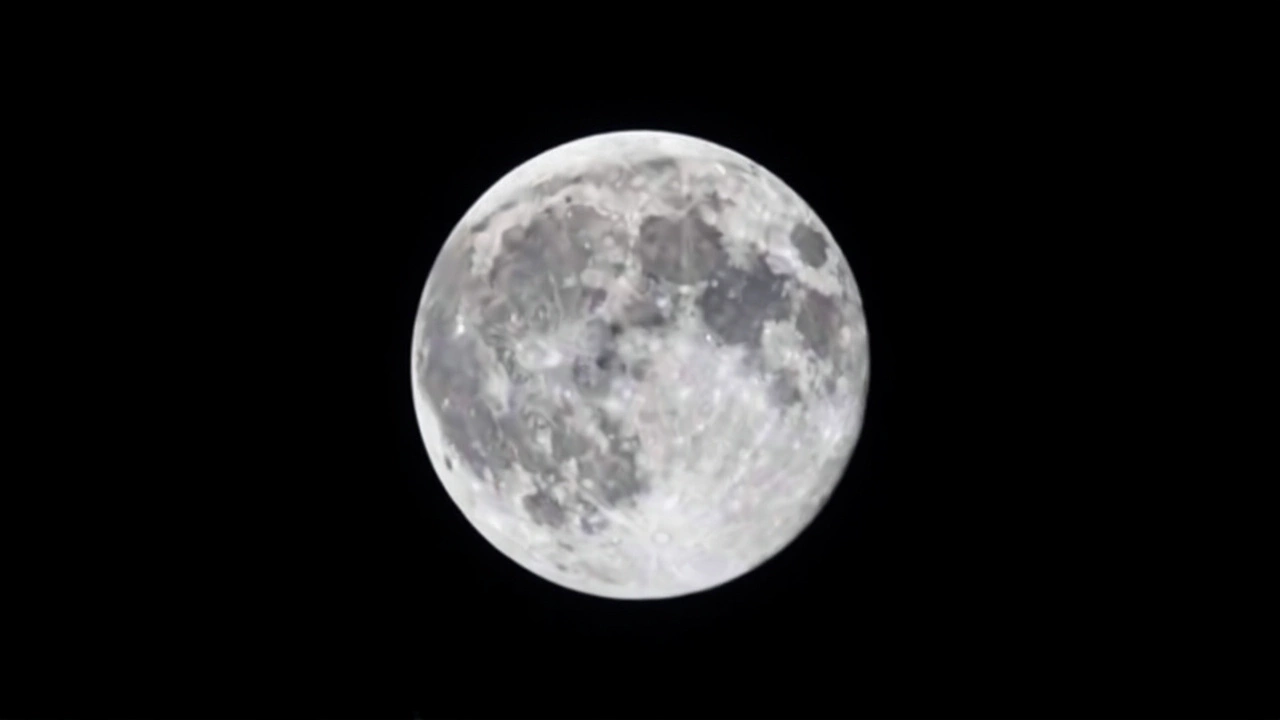
The final supermoon of 2025, known as the Cold Supermoon, reaches peak illumination at 6:15 p.m. EST on Thursday, December 4, 2025 — a moment that will leave skywatchers across North America breathless. At just 221,965 miles from Earth, this full moon isn’t just bright — it’s the closest, largest, and highest full moon of the entire year, according to the Old Farmer's Almanac. And it’s not just a pretty sight. Experts call it "the most extreme Full Moon until 2042," a phrase from Starwalk.space that captures just how rare this celestial performance truly is.
When and Where to See It
The moon will appear fully illuminated from Wednesday, December 3, through Saturday, December 5, but the sweet spot for viewing is Friday night. That’s when it rises about an hour after sunset, casting long, dramatic shadows across snow-covered landscapes — perfect for photographers with a tripod and anyone with binoculars or a beginner telescope. Live Science confirms the timing: the moon will hang high and steady, unobscured by clouds in many regions, offering one of the clearest views of the year.
There’s a slight technical nuance: while WION reported the peak at 6:15 p.m. EST, Starwalk.space pinpoints the exact astronomical full moon moment at 23:14 GMT — which converts to 6:14 p.m. EST. The difference? A one-minute discrepancy that matters to astronomers, but not to the casual observer. Either way, the moon will look full, massive, and glowing for hours.
Why It’s Called the Cold Moon
The name isn’t poetic license — it’s history. The Old Farmer's Almanac, which has been tracking lunar cycles since 1792 from its headquarters in Dublin, New Hampshire, draws its moon names from Native American tribes who used lunar phases to mark seasonal shifts. December’s moon? The Cold Moon. It signaled the deepening winter, when frost clung to the trees and hunting grew harder. Colonial farmers adopted the tradition, and today, it’s one of the few lunar names still widely recognized in mainstream culture.
It’s not just a name — it’s a calendar. And this year, the Cold Moon is also the highest full moon of 2025, climbing farther above the horizon than any other. That’s because of the tilt of Earth’s axis and the moon’s orbital path. In effect, it’s the most elevated full moon you’ll see until 2042. If you’ve ever wondered why winter moons look bigger and brighter? This is why.
What Comes Next: A Celestial Trio and a Quiet Close
Don’t pack away your binoculars just yet. On Sunday, December 7, 2025, the moon will glide past Pollux, the brightest star in the constellation Gemini, forming a straight line with the giant planet Jupiter. It’s a rare alignment — two celestial giants and our nearest neighbor in space, all in a row. For astrophotographers, it’s a once-in-a-year shot. The moon will also pass near the Beehive Cluster (Messier 44), though its glow may wash out the fainter stars. You’ll need binoculars to see it clearly.
And then? Silence. The next full moon won’t be a supermoon until January 3, 2026. The next Cold Moon won’t arrive until Christmas Eve — December 24, 2026, at 01:28 GMT. That’s over a year away. This one? It’s the last of its kind for 2025, and the most dramatic.
More Than a Sight: A Holiday Boost for Astronomy
There’s a quiet economic ripple too. Space.com notes this event is “perfect timing for skywatchers who want to try out a new pair of binoculars or a small beginner telescope this holiday season.” Sales of entry-level astronomy gear often spike around the winter solstice — and this supermoon is the perfect excuse. Whether it’s a gift under the tree or a personal New Year’s resolution, more people than ever are looking up.
And if clouds roll in? No problem. Space.com and other outlets will offer free livestreams starting at sunset on December 5. You don’t need to be outside to feel the awe.
What Astrologers Say — And What They Don’t
Some sources, including WION, suggest the Cold Supermoon’s position in the zodiac “mandates a major overhaul of communication and travel plans” for Gemini and Sagittarius. That’s astrology — not astronomy. While it makes for compelling headlines, there’s no scientific link between lunar phases and human behavior. Still, the symbolism resonates. In a year of uncertainty, many find comfort in the rhythm of the moon.
What’s Next for the Moon
After the Cold Supermoon, the lunar calendar shifts into a quieter phase. The next supermoon — January 3, 2026 — will be the first of the new year, and the next Cold Moon won’t arrive until Christmas Eve 2026. But the patterns continue. Supermoons occur roughly every 14 months, and the highest full moons follow a 18.6-year cycle tied to the moon’s orbital wobble. We’re in the middle of one now. That’s why this December’s moon feels so monumental.
Frequently Asked Questions
Why is the Cold Supermoon called the most extreme until 2042?
The Cold Supermoon of December 2025 is the highest full moon of the year due to the moon’s orbital tilt and Earth’s axial alignment. This combination won’t recur with such intensity until 2042, when the lunar node cycle realigns to produce similarly elevated full moons. It’s a rare convergence of geometry, not just brightness.
Can I see the Cold Supermoon without a telescope?
Absolutely. The Cold Supermoon is visible to the naked eye and appears significantly larger than an average full moon. For the best experience, step outside 30 minutes after sunset on December 5. Binoculars will reveal craters and shadows along the terminator line, but no equipment is needed to appreciate its glow.
What’s the difference between a supermoon and a regular full moon?
A supermoon occurs when the full moon coincides with perigee — the point in its elliptical orbit closest to Earth. This makes it appear up to 14% larger and 30% brighter than a full moon at apogee (its farthest point). The Cold Supermoon is 221,965 miles away, compared to the average of 238,855 miles.
Why does the Cold Moon rise later on December 5?
The moon’s rising time shifts by about 50 minutes each day. On December 5, it rises roughly an hour after sunset, meaning it’s already high in the sky when darkness fully falls. This delay creates ideal contrast for photography and reduces glare from twilight, making it the optimal viewing night.
Is there any scientific impact from the Cold Supermoon?
No direct physical impact on Earth’s weather or tides beyond normal tidal forces. Supermoons slightly increase tidal ranges — but only by inches. The real impact is cultural: it inspires curiosity, reconnects people with natural rhythms, and drives public interest in astronomy and science education.
Where can I watch a livestream if the weather is bad?
Several astronomy websites, including Space.com and the Virtual Telescope Project, offer free livestreams starting at sunset on December 5. These broadcasts often include expert commentary and telescope views from observatories in clear-sky regions like the Canary Islands or Arizona.




Write a comment